
Jim Jantz, JD
Director of Compliance – Absence, Disability, & Life

Effectively managing employee leaves of absence and accommodations is a critical challenge for employers today. With evolving laws like the Family and Medical Leave Act (FMLA) and the Americans with Disabilities Act (ADA), staying informed and proactive is essential. One key area that often determines success in this complex landscape is manager training—ensuring managers have the knowledge and skills to support employees while maintaining compliance.
Managers are often the first point of contact when employees request time off or accommodations, making their role crucial in ensuring compliance with federal, state, and local laws. However, the complexity of laws such as the FMLA and ADA can be overwhelming. These regulations require employers to provide leaves and reasonable accommodations while preventing retaliation and discrimination. Without proper training, managers may struggle to accurately interpret and apply these rules, which can increase compliance risks.
According to Marsh McLennan Agency (MMA)’s 2025 Leave of Absence and Time Away from Work Survey, manager training remains the leading pain point in leave administration.
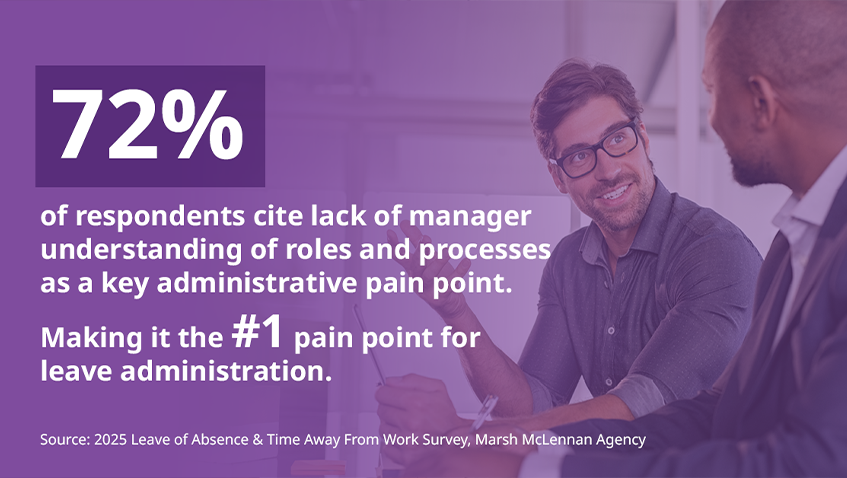
Key obstacles organizations face include:
Effective training focuses on practical, usable information rather than overwhelming details. Key topics include:
Importantly, training should emphasize that employees don’t need to use specific “magic words” to request leave or accommodations. Managers should listen carefully, ask open-ended questions, and guide employees to the right contacts who can help initiate the process.

As regulations evolve, it’s more important than ever to equip your managers with the right tools. Consider these steps:
To enhance training impact, explore options beyond traditional classroom sessions:
Marsh McLennan Agency’s Absence, Disability, & Leave practice brings over 25 years of experience helping organizations improve leave management. We work with you to identify training gaps and develop practical programs that empower your managers to handle leave and accommodation requests with confidence and compliance.
By investing in manager training, you can help reduce compliance risks, improve employee satisfaction, and build a workplace culture that values support and understanding.
Ready to strengthen your manager training and leave administration? Contact us to learn how we can help you navigate these challenges with confidence.
Director of Compliance – Absence, Disability, & Life


